

read more
Supporting Lung Transplant Caregivers: Essential Guidance, Self-Care, and Resources
Caregivers are often the behind-the-scenes heroes of the transplant journey. Across the United States, roughly 44 million Americans provide unpaid …
Once discharged, the transplant patient who has relocated may need to stay in the area to recover and rehabilitate and will have frequent follow-up doctor’s visits and tests. In any case, your role as a caretaker can become more challenging as you manage the post-transplant protocol. You will need to assist in administering medication and monitoring blood pressure, blood sugars, and pulmonary function. Post-transplant medications affect each patient differently. Be observant and note any changes in mood, energy level, breathing function, and cognitive abilities. If you have any concerns, call your transplant coordinator immediately. Don’t hesitate to do this. The coordinator would rather hear routine things than fail to hear about something important.
The number of post-transplant medications and medical supplies can be overwhelming and can soon take over your home. To free yourself from the chaos, you might try:
• Creating closet space to house everything.
• Labeling boxes to put supplies in.
• Putting pill cases away immediately after use.
• Keeping a list of medications with a schedule for administering them and reordering them.
• Having a fixed time for refilling daily pill boxes.
As your loved one begins to heal, he or she will begin to soar, free of oxygen and illness, and be able to breathe freely. This is a fun time to learn new physical activities and hobbies to build stamina, strength, and energy. A new world will be at your loved one’s disposal. Recovery can be a wonderful time filled with the promise of a healthy life, so embrace it fully. Just make sure to always keep safety in mind: Avoid crowded places, wash your hands regularly or use alcohol hand gels, wear masks when appropriate, and know when to rest.
Long-term post-transplant complications are common. Rejection and infection can occur at any time. Side effects of immunosuppressive medications can take many forms, and some can be dangerous. Be acutely aware of any changes in your loved one’s appearance or demeanor. A slight temperature and even minor flu-like symptoms need to be reported and treated immediately.
As a caretaker, this is the time to embrace, be present, and be loving, kind, and patient with yourself and your loved one. Know that you are in a situation in which you cannot control the outcome, but you do have control over how you handle yourself and each situation that arises. Staying centered, caring for your own needs, asking and graciously receiving assistance, adopting a healthy diet and lifestyle habits, and making the absolute best of each moment will help you manage the stress of caregiving physically, mentally, and emotionally.
Caregivers are often the behind-the-scenes heroes of the transplant journey. Across the United States, roughly 44 million Americans provide unpaid …
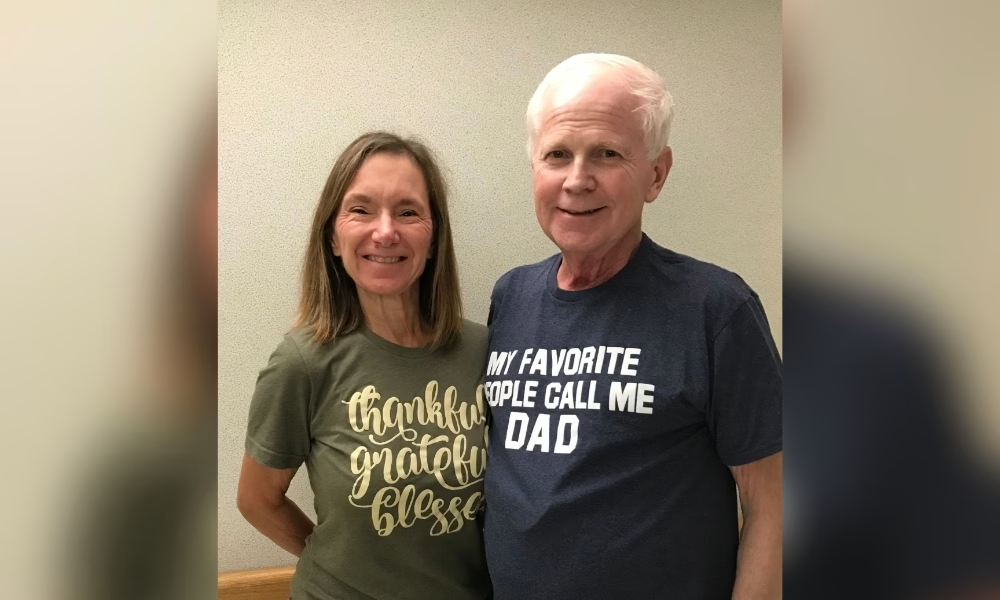
Understanding the Journey Firsthand I wanted to become a caregiver mentor because I wanted to give back and help other …

Leisure Ideas for When You’re Hospitalized, Homebound, or Otherwise Struggling. For individuals navigating the complexities of a lung transplant journey, …

Creating a world where all lung transplant patients live long, healthy lives.
1249 Kildaire Farm Road, Suite 323
Cary, NC 27511
Disclaimer: This website does not provide medical advice. The information, including but not limited to text, graphics, images, and other material contained on this website are for informational purposes only. No material on this site is intended to be a substitute for professional medical advice, diagnosis, or treatment. Always seek the advice of your physician or other qualified health care provider with any questions you may have regarding a medical condition or treatment before undertaking any new health care regimen. Never disregard any professional medical advice or delay in seeking care because of something you have read on this website.