

read more
Substance Use and Lung Transplant: Facts, Honesty, and Healing
Alongside the extraordinary circumstances of living with a lung transplant, recipients experience many of the same joys and struggles as …
The relationship between a caregiver and a patient is both essential and complex, particularly within the lung transplant community. In a recent “Transplant Talk” webinar hosted during National Family Caregiver Month, Jodi Taub, LCSW, a chronic illness and rare disease specialist, shared profound insights into building resilience and maintaining connection throughout the transplant journey.
Watch the full webinar recording below to dive deeper into these strategies.
Caregiving involves navigating a unique set of stressors that can lead to burnout. These include:
Caregiver burnout is a real stress response to being overwhelmed. It is common for caregivers to experience feelings of shame, guilt, anger, and isolation. Taub emphasizes that taking care of your own mental health is not selfish—it is necessary for providing the best care to your loved one.
To combat burnout and foster growth, Taub suggests several evidence-based strategies:
Medical trauma is unique because it is often chronic, and the body “remembers” the fear and uncertainty. Healing requires emotional safety and specific repair strategies:
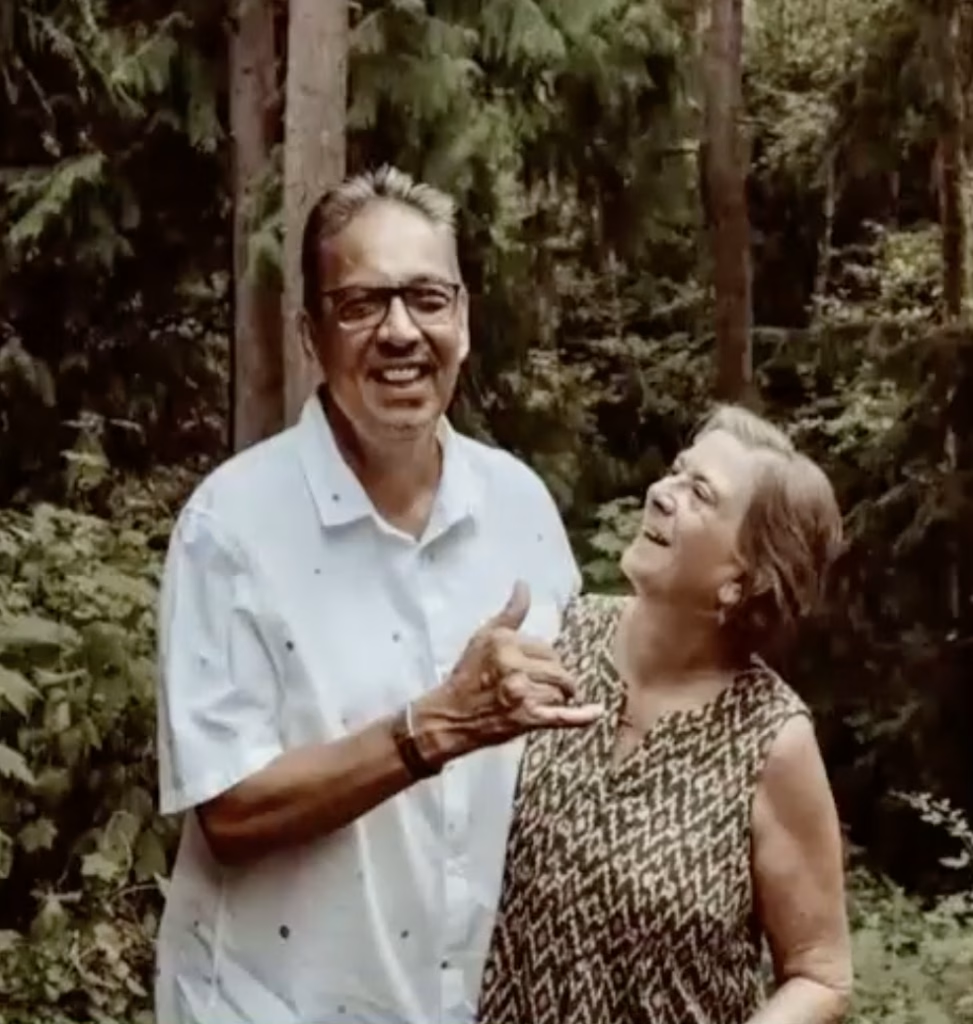
A special thank you for contributions by Lung Transplant recipient Floyd and his loving wife of forty-three years, Diana Mestes. When Floyd’s transplant did not go as planned, the two of them were able to draw upon the strength of their long standing relationship, the care of their adult children, and the support of their larger lung transplant community. Despite his original setbacks, Floyd recovered fully and went on to volunteer at his local pulmonary rehab program, serving as a role model and offering encouragement to others walking this path.
Managing mental health is a key component of the lung transplant process. You do not have to walk this path alone.
Explore Our Resource Library: Find more “Transplant Talk” recordings and guides on our website.
Join the Mentorship Program: Connect with a peer mentor who has been through the transplant process.
Sign up for updates:
Join our community and receive the latest news about lung transplant.
Alongside the extraordinary circumstances of living with a lung transplant, recipients experience many of the same joys and struggles as …

Caregivers are often the behind-the-scenes heroes of the transplant journey. Across the United States, roughly 44 million Americans provide unpaid …

Receiving a lung transplant is a transformative, life-saving event. For individuals who faced late-stage lung disease, a successful transplant offers …

Creating a world where all lung transplant patients live long, healthy lives.
1249 Kildaire Farm Road, Suite 323
Cary, NC 27511
Disclaimer: This website does not provide medical advice. The information, including but not limited to text, graphics, images, and other material contained on this website are for informational purposes only. No material on this site is intended to be a substitute for professional medical advice, diagnosis, or treatment. Always seek the advice of your physician or other qualified health care provider with any questions you may have regarding a medical condition or treatment before undertaking any new health care regimen. Never disregard any professional medical advice or delay in seeking care because of something you have read on this website.