Though for many the holiday season is a time to celebrate and connect with loved ones, for those impacted by lung disease, lung transplant, and related chronic illnesses, this time of year can present even more challenges than usual. Along with increased social expectations, financial obligations, and rise in seasonal illnesses, comes a greater risk of physical, medical, and emotional setbacks.
In recognition of the too often unseen and frequently misunderstood hardships facing individuals impacted by lung disease, including those who are pre and post lung transplant, and their loved ones, the Lung Transplant Foundation has tapped into one of our greatest resources: our community of mentors.
Offering insight and compassion gained from their own lived experiences, 18 active Lung Transplant Foundation mentors serving in our mentorship program, responded to a survey about the challenges they have faced during the holiday season as transplant recipients and caregivers. With questions and answers covering the specific physical, social, emotional, and financial obstacles they have faced, as well as what coping mechanisms and solutions they have found, we hope to offer anyone struggling this holiday season with not only the comfort of having such hardships seen and acknowledged, but some words of advice and encouragement. Additionally, we encourage you to share this resource with friends and family who may need further help understanding what you are experiencing.
Please note, this article does not provide any medical advice. The information included is for informational purposes only and is not intended to be a substitute for professional medical advice, diagnosis or treatment. Always seek the advice of your physician or other qualified healthcare provider with any questions you may have regarding a medical condition or treatment before undertaking any new health regimen. Never disregard any professional medical advice or delay in seeking care because of something you read here.
“It isn’t like other conditions.”
—Tracie, 69, caregiver mentor
Though all individuals managing serious medical conditions face difficulties this time of year, according to our mentors, those in the lung transplant community are often uniquely challenged. The heightened concerns that come with being immunocompromised, the side effects of medication, and the emotional turmoil of managing decisions and realities of transplant are often difficult to bear, especially during a time of year when everyone is celebrating.
In our survey, mentors were asked to identify what specific challenges are the most pronounced for transplant patients. While 67% of respondents identified the physical and medical considerations as the most disruptive, at 61% social expectations from friends and family came a close second. The overlapping concerns that come with co-managing health and social connections can be frustrating, isolating, and even emotionally distressing.
“People who do not have chronic health conditions do not understand what transplant patients experience before and after the transplant. It isn’t like other chronic conditions,” said Tracie, a mentor who cared for her husband throughout his lung transplant journey.
For Jennifer, who is 6-years post-transplant herself, the multi-faceted nature of the holiday season presents a “significant hurdle.” She explains, “since transplant recipients are immunocompromised, being in a setting with large groups of people can be quite stressful. Many recipients may find it nerve-wracking to navigate social gatherings where others may not fully understand the severity of their immune concerns.”
Kasey, 34 and 9-years post transplant, shared a similar view offering that even when you are careful, spending time with people who are also traveling increases risk of exposure to “viruses that could put us in the hospital.”
Annie, 62, and 15-years post transplant shared how the challenge to manage these realities is made more difficult when friends and family do not understand. “In the immediate years leading up to transplant, I found expectations around stamina, both physical and emotional, to be quite challenging. Explaining to family and friends that I often didn’t have the energy to attend a gathering or event was difficult. Most often it wasn’t due to the length or location of the event itself, but rather the energy involved in prepping and readying oneself to get there.”
This sentiment was felt across the board in nearly all of the survey responses. For transplant patients and caregivers, beyond the increased possibility of getting sick, there are so many other medical concerns. From “shortness of breath and needing constant oxygen…” and the “embarrassment” of “being in public and having panic attacks due to lack of oxygen,” (Judy, 64, 2 years post-transplant) to the uncontrollable side effects from medications, such as digestive issues forcing decisions about “choosing whether to eat and risk a [bowel movement] when you’re not expecting it, or not to eat,” (Erin, 53, 6 years post-transplant), such physical considerations can make attending social functions overwhelming and exhausting, before even stepping out the door.
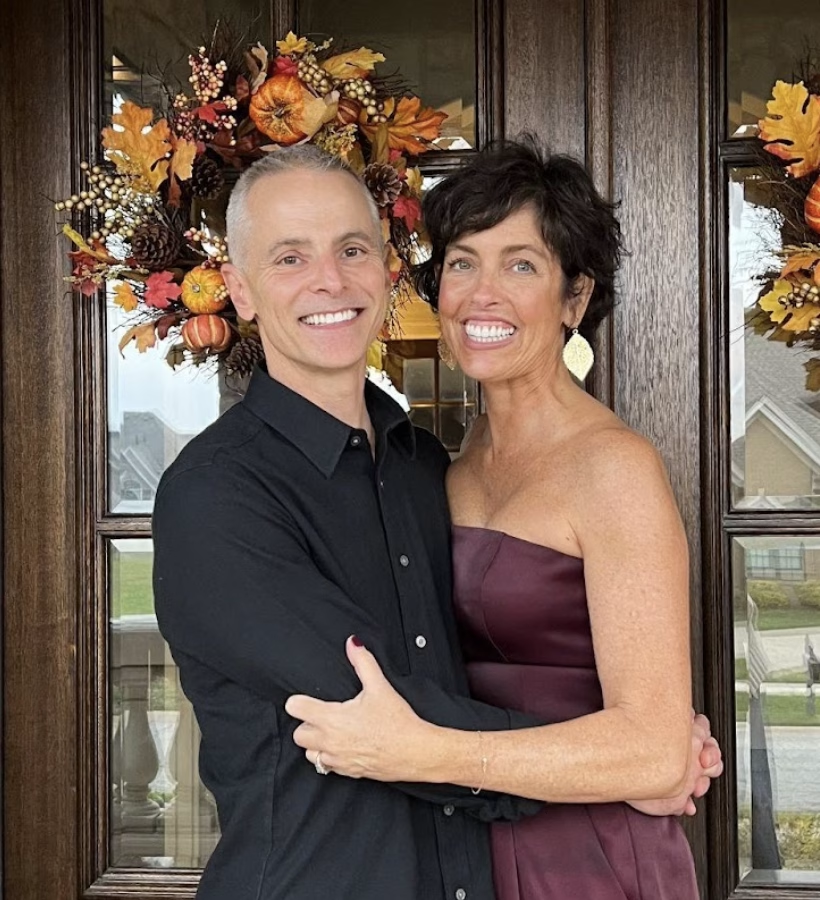
Mentor Erin (right), with husband of 20 years Michael (left)
Thanksgiving 2024
“I had just celebrated my 5th year lungaversary that August and it was one of the first times I really ‘handled’ all of the Thanksgiving on my own since transplant!”
For many transplant patients, the emotional fallout that comes from carrying so much can be significant, no matter where you are in the transplant journey. “Being on a transplant list and away from family and friends during the holidays was depressing,” Tracie said. For Bill, a caregiver for his daughter who is 6 years post-transplant, the burden of “life and death decisions and second guessing those decisions,” is massive, not to mention the emotional weight of receiving a transplant to begin with. “I think of my donor’s family,” says Liz, 72 and 5 years post transplant. “[I have] tremendous gratitude, but also sadness for them in their loss.”
The reality is that while the holidays can be a wonderful, yet stressful time, for the average person, there are many hidden challenges facing lung transplant recipients and caregivers that deserve more recognition. While some mentors agreed that the holidays grew easier in time as their circumstances improved, the vast majority suggested that the very real challenge of the holiday season became more manageable primarily throughdeveloping better coping strategies and finding solutions.
So what do our mentors suggest? When it comes to the physical/medical challenges, social expectations, emotional struggles, and financial concerns, the answer is clear: plan ahead, set clear boundaries, accept a new reality, and reach out when you need help.
Let’s dive deeper into each of these points with specific insights from our mentors.
Planning Ahead & Setting Clear Boundaries
“Say no as often as needed. If people don’t support that, they shouldn’t be a part of your life.”
—Erin
For some mentors, planning ahead means approaching this time of year with precaution, paying even closer attention to your physical symptoms than normal. As Kasey shared, “Going into the holiday season I make sure that I have all my shots and am listening to my body. If something starts to feel off I reach out to my doctor immediately to make sure nothing spirals out of control.”
But while the ongoing management of your health may be something you’ve grown used to, with some mentors suggesting it doesn’t change that much during the holiday season, finding a way to navigate months of invitations, and the extra energy, and precautions needed to get through them can be taxing. Depending on your circumstances, you may find some of the following words of wisdom from our mentors especially helpful when figuring out how best to approach your holiday gatherings this year:
“Load the car the night beforehand, shower the day before rather than the day of, eat light (which made it easier to breathe), etc. I would suggest keeping extra portable oxygen on hand, to allow for surprise outings and/or guests. I found it helpful to schedule myself light, which allows time/space for surprise opportunities.” —Annie
“Wear a mask and be the first to serve yourself so people haven’t put their hands all over the food.” — Tammy, 66, 10 years post-transplant
“Build in time for rest so you feel your best for the activities and gatherings that are most important to you.” —Nicole, 50, 9 years post-transplant
“Skip alcohol, drink plenty of water, take naps, work on your hobby, work out what your body allows, and pray.” —Pete, 66, 20 years post-transplant
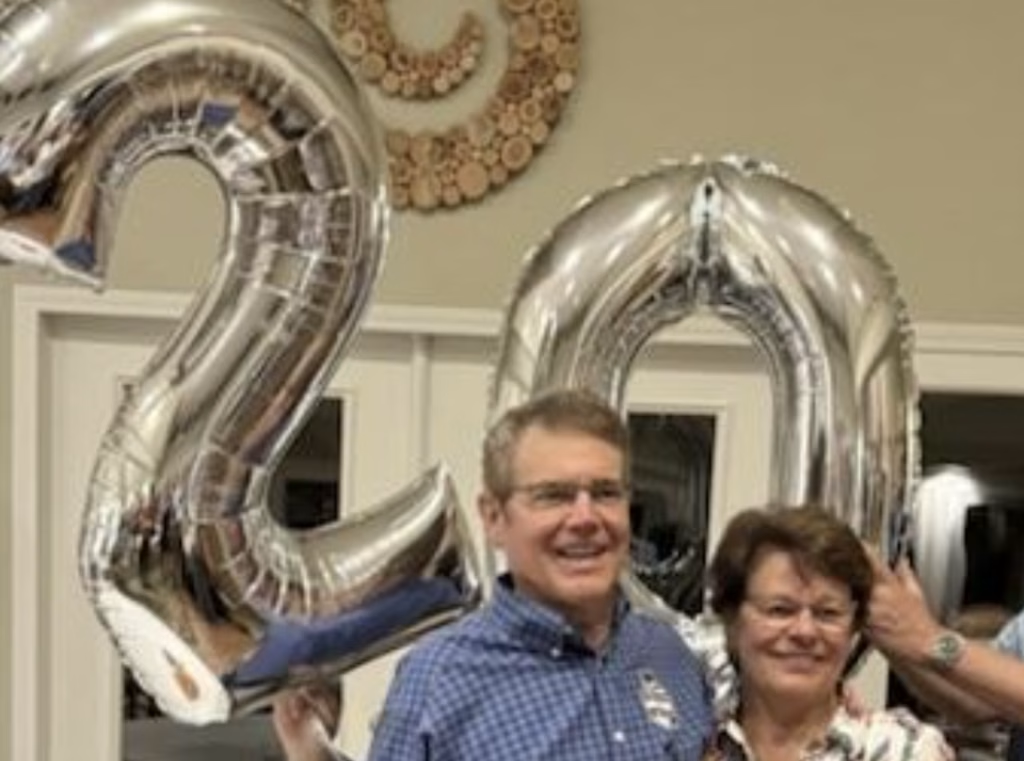
Mentor Pete (left) with wife, Terri (right)
The photo is from last month as I had my 20th lung transplant anniversary dinner party – hence the 2-0 balloons! My actual transplant date is November 14. Three lung transplant friends and their spouses attended. Along with my local family members and others from out of town, it was a memorable time!
“This is an expensive time of year and I think it’s important to resist buying everyone lots of gifts and overspending on holiday decor. Homemade gifts, something easy and small are usually so appreciated. Give yourself permission to not exchange gifts if you can’t afford them. Do a small kindness or bake some cookies and give as gifts. People love homemade baking! —Liz
Still, when so many of the challenges this time of year come down to navigating social situations, sometimes the greatest way to plan ahead involves taking the time to set clear boundaries. This was the most consistent theme in all of our survey responses.
Janie offered a specific approach she found helpful, telling her family “I love and need to be at family gatherings. My doctors provided me with the following guidelines in order that I can remain healthy…” She went on to suggest that if masks are recommended, you should have them in hand to distribute.
Some additional suggestions and words of encouragement from our mentors:
“Keep gatherings small. Your lungs come first, and if you set the precedent from the beginning, it will become easier. I’ve always opened with the question, ‘Is anyone feeling sick?’ I also supplied everyone with funny Christmas masks to make it fun. Bring your own dish to share to avoid asking what ingredients are in what is being offered.” —Judy
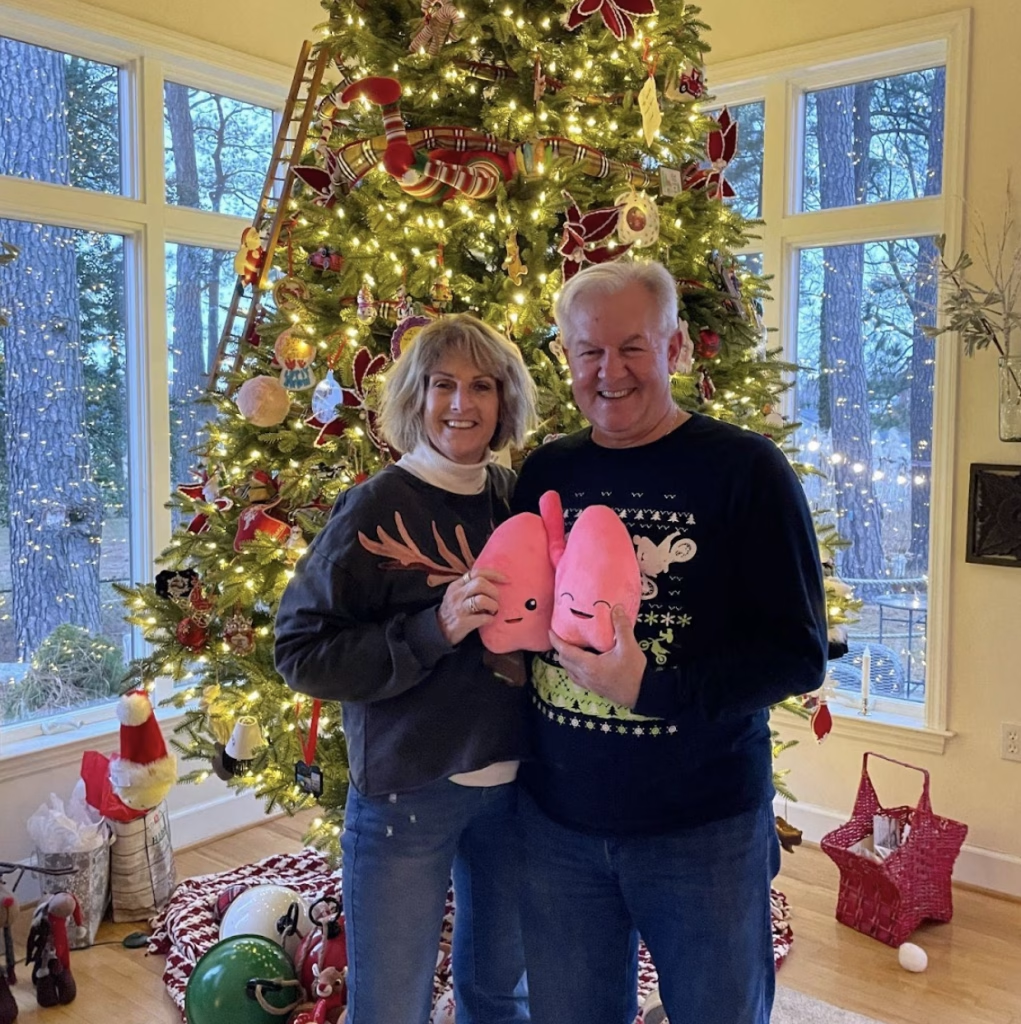
Mentor Judy (left) and husband Pat (right)
This photo was taken in our home December 15th 2023 three weeks after my DLT on 11/22/23. [This year] we will be celebrating my second lung anniversary with close friends who traveled the journey with us. Thanksgiving we will be celebrating with family. I woke up Thanksgiving day in 2023 after surgery breathing room air! Since my transplant I have also witnessed my daughter and her husband give birth to two girls. Together with my son and his wife I now have four granddaughters. Today I spent the day at one of my granddaughters’ grandparents day. My level of gratitude is profound!
“State boundaries for others… no hugs, ask if they’ve been sick… wear a mask or socially distance.” — Janie, 71, caregiver
“I either don’t go to local social events or I sit outside if it’s warm enough. It’s become part of my life for 25 years. I only see my family indoors to dramatically reduce the chance of contracting a virus.” —Pete
“Say no as often as needed. If people don’t support that, they shouldn’t be a part of your life.” —Erin
“Using FaceTime for visiting with family and friends is helpful. Seeing the smiling faces of grandchildren and family members is a way to boost your mood.” —Tracie
“Remember that the patient’s health is paramount. It’s the patient/caregivers team that’s responsible for guarding and maintaining it. If that causes social or family issues (e.g., ‘please don’t bring the sick kid to the gathering,’) and gentle explanations aren’t enough, accept the result.” —John, 78, caregiver
Accepting a New Reality & Honoring Your Resilience
“Choose what you are able to navigate on any given day.”
—Annie
But as we all know, even with the best of plans, unexpected challenges can arise, which is why so many of our mentors emphasized flexibility and honoring your own limitations, and resilience, as necessary when prioritizing your wellbeing during the holidays.
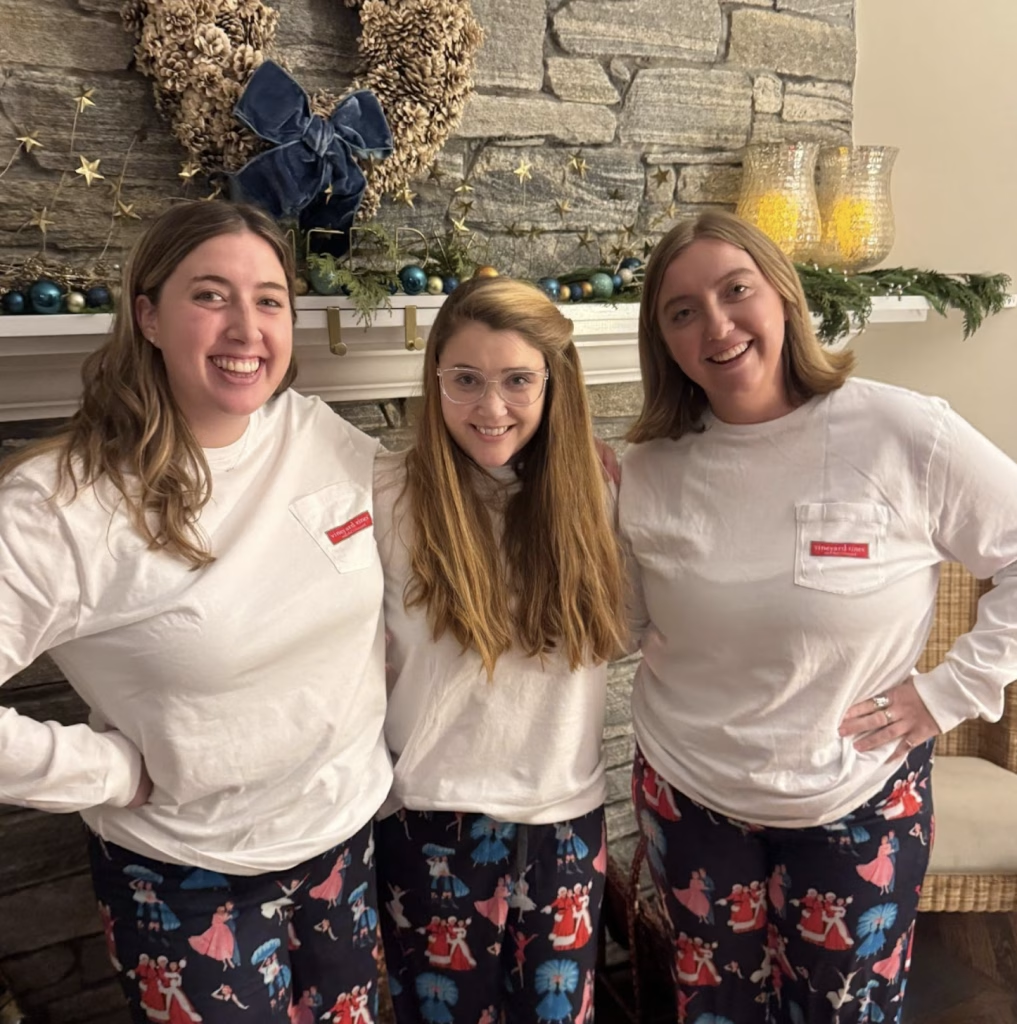
Mentor Kasey (middle,) her sister Maggie (left), and sister Charlie (right).
“This photo is of my sisters and I on Christmas Eve 2024, every year my mom gets us matching PJs and last years featured a scene from White Christmas – the “Sisters Sisters” song.”
“I believe it comes down to energy,” Annie shared. “Choosing what you are able to navigate on any given day.” Similarly, Kasey explained, “I often find myself very tired. There are so many parties I have to make sure I am not overdoing it. If I start to feel run down or tired that could have an impact on my overall health.”
But for Mark, 73 and 8 ½ years post-transplant, the key is doing what you can, but stepping back when needed. “Press on with what you are able to do. But when attending an event, be prepared to leave if you sense sick attendees.”
All of these considerations can be exhausting. It is common for the mental health of both patients and caregivers to suffer at different points throughout the transplant process. But as Liz shares, the holiday season may further heighten those struggles for some. “This can be a difficult time of year…loneliness and grief seem to get worse… our expectations are so high.”
It can be difficult to temper expectations for what the holidays should look like. Tradition, by nature, is something we come to rely on. But many of our mentors suggested that while this is true, it is better not to dwell on what you are missing, but refocus your energy on what still lies ahead, and what you can do.
“Dwell in the possible”
—Carol
For Judy, bearing in mind that this is temporary can be very helpful. “Look at it as just one of those years. There will be others,” she offered. “Take it one day at a time. Go for a walk and enjoy the lights or drive around and enjoy the lights. Watch the Hallmark Channel, the movies always have a good lesson as corny as that sounds. Treat yourself to more desserts!”
Carol echoed this perspective, sharing how she personally found new ways to celebrate. “Be grateful for all you do have and find substitutions for the things you miss. Pre-transplant, when I was too weak to get up and dance, I learned to strum a ukulele and dance in my fingers. Dwell in the possible.”
For several mentors, finding a way to give back was vital to making their holiday season meaningful. “Being able to help someone else is very uplifting,” Liz shared. “At church we have a giving tree and when I took the tag off the tree and read the story of the person I would be buying gifts for, it was very humbling.”
Some additional perspectives from our mentors:
Remind yourself of how far you have come and recall life and limits prior to lung transplant; rely on your faith” —Janie
“Your transplant enabled you to experience another holiday season. Take joy in that, and give thanks for your donor and their family.” —John
“Remember what got you to the point of being a post-transplant person…You are here to enjoy life. Be thankful for every day you wake up in the morning and your feet hit that floor.” —Susan, 66, 3 years post-transplant
“Be kind to yourself as you are to others. Realize most of us do not have those Hallmark movie perfect lives and holidays. We each just try the best we can.” —Liz
“You were given this second chance for a reason. The possibility of getting sick is scary, but you can’t let that rule your life. It’s important to enjoy this time of year…after all, you went through hell to get here.” — Kasey
“Focus on what gives you comfort; your faith, your closeness to nature, the knowing of how much you are loved, for example. I try to take time every day to sit on a bench in my shade garden and listen to the birds. Notice what’s popped up among my flowers and ferns.” —Carol
“Be gentle with yourself. Celebrate small victories, and accept help when it is offered. Engage in activities like journaling or meditation.” —Jennifer
“Some things get easier, some do not. But you’ve already made it through thehardest part: surviving until transplant and making it out of that arduous processalive. Seek help. Say no. Allow people to support you. Rest. You’ve got this.” —Erin
Ask for and Accept Help
“You are never alone. A mentor would love to talk with you.”
—Annie
Erin’s comment echoed what many of our mentors emphasized again, and again, in their responses. While this experience can be very isolating, you are not alone.
If you are struggling financially, connect with community resources. “Research agencies that provide help, food banks, thrift stores, churches. People will understand if you do not buy gifts,” Janie suggested. “A heart felt card is something your friends and family can keep forever. Your presence is the present, as you are a miracle to be alive! Humble yourself and be ok asking for help.”
“Always know that it’s ok to reach out,” Annie offered. “Churches, senior centers, and community centers are great places to start. People love to help!” For Susan, this rang true, as she encouraged everyone to tap into their community. “They are really ready to help, more than you know.”
But when the help you need isn’t financial, but perhaps more emotional, knowing what to ask for and who can help is understandably challenging. While many of our mentors suggest connecting with trusted family and friends, as Annie reminds, “connecting with someone you trust – someone who makes you laugh and with whom you can safely share your feelings, isn’t always family.”
Many of our mentors suggested reaching out to mental health professionals, such as therapists, as well as clergy members. Others suggested tapping into support groups, or finding others who have had similar experiences as you who understand what you are going through. But whatever you do, “do not isolate yourself,” Tammy offered. “Try to surround yourself with positive people.”
Annie offered a similar perspective, with the added reminder to anyone in need of support that, “You are never alone. A mentor would love to talk with you.”
The Lung Transplant Foundation’s mentorship program connects lung transplant recipients and caregivers with experienced mentors, who not only understand the ups and downs of this complicated journey from their own personal experience, but desire to give back to those actively in need of support. As Liz offered, “No one knows what it’s like better than someone who has had a transplant themselves!”
So for our final question on this year’s holiday survey, we asked mentors to share a few words about what it means for them to serve the community this way. It is our hope that these words, shared with genuine compassion and interest in giving back to the community, can offer you some comfort this time of year in knowing that no matter where you are in your journey, you are not alone and the Lung Transplant Foundation’s brilliant team of mentors are here to support you.
“The relationships I’ve built with my mentees have been invaluable and I can’t imagine a better way to give back to the world than to help others who are going through what I did.” —Erin
“My drive comes from within to give back and guide/help others that are going through all of the same stuff I went through. It is scary and, if I can, I want to bring that person comfort, calmness, and hope.” —Tammy
“I feel called to share my experience and be present to assist others. It is part of feeling grateful for extending the life of my daughter.” —Bill
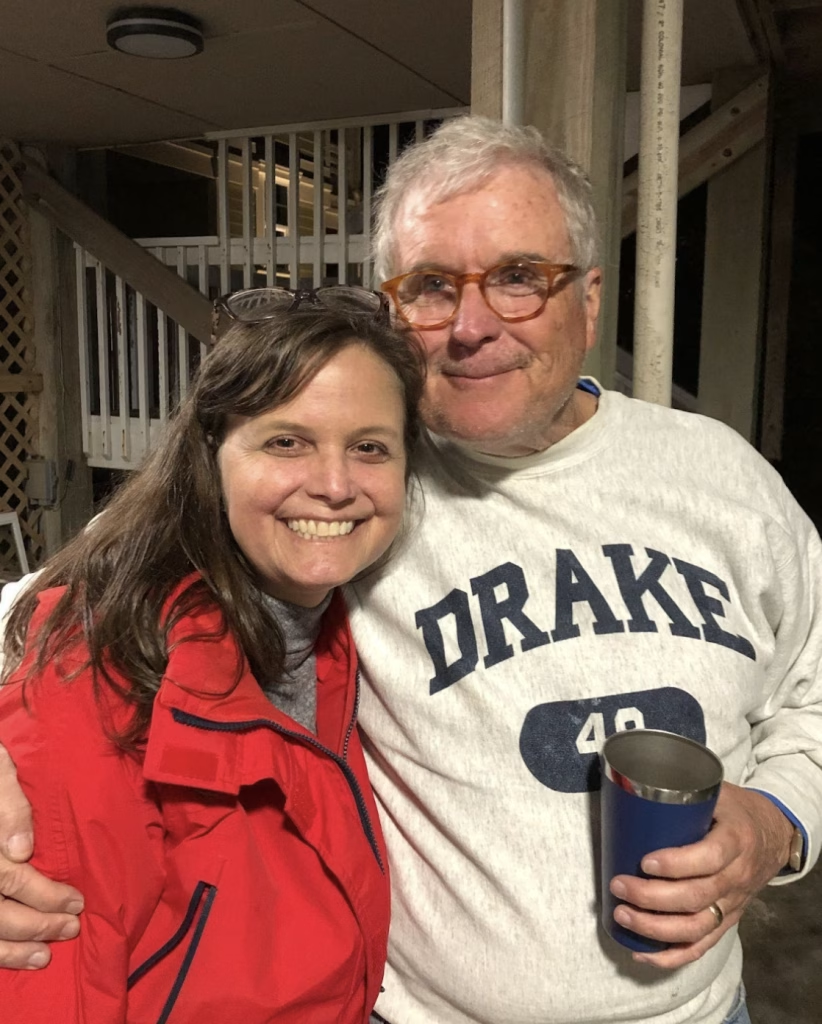
Caregiving Mentor Bill, right, with daughter (Jean-Gray)
Thanksgiving 2019
“This photo was taken November 2019 just 5 months after my daughter’s bi lateral Lung transplant. The old dude is me, Bill, her proud dad. We were at a Thanksgiving family gathering at a NC beach with approximately 40 family and friends. Although she couldn’t eat the oysters, she/ we were so happy to share her and her success with our supportive family. Celebrating life and a family of very thankful people for the doctors and our donor family.
We are celebrating Thanksgiving # 6 with her this Thanksgiving.
“When I was in the ‘thick of it’ I really couldn’t problem solve very well. I was just trying to manage and get through the day. It turns out that my ideas (as a mentor) are really helpful to my mentee. So that makes me feel really good and that Dan’s lung transplant journey serves a purpose for someone else.” —Janie
“I was fortunate to have been mentored by some amazing women. It is my turn to give back and I treasure every connection. It is an honor to be folded into the journey of another.” —Annie
“I feel incredibly fortunate and I want to give back. The best way I can do that is by listening to individuals currently going through the process. I want to reassure them that anything is possible. —Nicole
“I am proud to walk side by side with anyone on this journey.” —Judy
“If I can help at least one person, it is so worth it.” —Susan
Finally, the Lung Transplant Foundation would like to wish all members of our community a safe, healthy, and uplifting holiday season. As we look forward to 2026, we hope to continue to enhance our existing programs while also bringing new opportunities to connect, educate, and support one another on this journey.
Sign up for updates
Join our community and receive the latest news about lung transplant, including research, inspiring stories, and resources.
Disclaimer: This website does not provide medical advice. The information, including but not limited to text, graphics, images, and other material contained on this website are for informational purposes only. No material on this site is intended to be a substitute for professional medical advice, diagnosis, or treatment. Always seek the advice of your physician or other qualified health care provider with any questions you may have regarding a medical condition or treatment before undertaking any new health care regimen. Never disregard any professional medical advice or delay in seeking care because of something you have read on this website.