
read more
Learning to Care for Myself: A Caregiver’s Journey
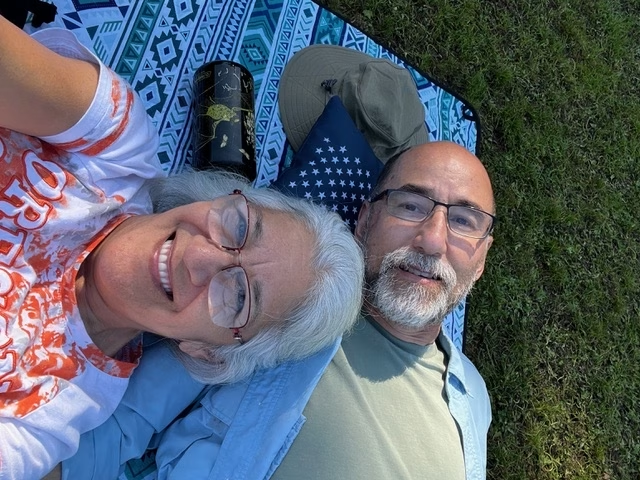
By Patrice Dragon: a wife, caregiver, and lung transplant survivor’s partner My journey as a caregiver to my husband, Mike, …
For the last year, Dan Keota has been waiting for a double-lung transplant. With progressive health concerns consuming his life since 2017, getting listed was a huge milestone. But as many in the lung transplant community have experienced, the often long wait to receive the call can lead to significant anxiety, making life even harder both physically and emotionally. After pursuing comedy classes as a means of stress relief, Dan, 42, along with his wife Chelsea, 37, founded the Pennsylvania-based nonprofit organization, Die Laughing Inc.
With their mission including raising funds for Penn Medicine, the Foundation for Sarcoidosis Research, as well as the Lung Transplant Foundation, Die Laughing Inc. regularly hosts live standup events in Pottstown, Pennsylvania, a Philadelphia suburb. As career professionals working in management and accounting, Dan and Chelsea were new to both comedy and running a nonprofit. However their shared passion for laughter, building community, and fundraising has given them both a fresh focus to “support others facing similar challenges while they wait for the potential life-saving phone call.”
In this season of giving, the Lung Transplant Foundation sat down with Dan to learn more about his story and what inspired him to create an organization with a mission of fundraising.


I am a Pennsylvania-based comedy producer, nonprofit founder, loving husband/cat dad, and sarcoidosis advocate.
In 2017, a ruptured lung abscess led to extensive testing and, ultimately, a diagnosis of pulmonary sarcoidosis complicated by Aspergillus. Over time, the pulmonary sarcoidosis caused extensive scarring throughout the lungs, leading to a significant decline in lung function and overall health. As my condition continued to progress despite treatment, my doctors determined that a double lung transplant would be the best path forward.
Doctor’s appointments have always brought me a lot of anxiety, but as my health declined, that anxiety became harder to manage. My life felt consumed by appointments, tests, and the constant fear of what the next result might bring. Then, during my transplant evaluation, doctors saw things on my left heart catheterization that concerned them. Suddenly, there was another terrifying unknown: would I need a heart transplant in addition to a double lung transplant? What followed were three long months of more heart tests, appointments, waiting, and worrying about what this could mean for my future. The uncertainty was overwhelming, but eventually we received the news we had desperately hoped for—my heart was strong enough, I would not need a heart transplant, and I could continue moving forward toward a double lung transplant.
I needed something that could pull me away from the medical world, even if only for a few hours, so I took a chance and enrolled in comedy classes. Comedy became my escape—a place where I could laugh, feel like myself again, and forget for a little while just how scary and uncertain life had become.
I’ve always been a naturally goofy guy who loves making people laugh, but strangely enough, I never really had an interest in comedy. Chelsea was always much more drawn to it than I was. She started bringing me out to shows to see comedians like Jay Yoder and Steve Rinaldi, and little by little, I started to understand what made the comedy community so special.
Now, some of my biggest inspiration comes from the comedians who show up at our open mics week after week. They’re putting themselves out there, working on their craft, and chasing a dream. It means a lot knowing that Die Laughing could be one of their first stepping stones—the place where someone finds their confidence, gets those first laughs, and begins a journey we get to watch grow.
Comedy became my escape—a place where I could laugh, feel like myself again, and forget for a little while just how scary and uncertain life had become.
Penn encouraged us to explore fundraising to help support the transplant journey and life after surgery. After our July 2025 show, I realized I didn’t want to be the comedian—I wanted to be the producer. With my declining health making it difficult to stand for long periods, producing gave me a way to stay involved in comedy while creating opportunities for others.
As more comedians approached us asking for stage time and future shows, we realized we had something worth building. Penn connected us with their business development team, and from there, we moved forward with establishing Die Laughing as a 501(c)(3)—turning a difficult chapter of our lives into something that could bring people together through comedy and give back.
We use the power of comedy and human connection to bring people together while raising funds and awareness for the Penn Medicine Lung Transplant Program, the Foundation for Sarcoidosis Research, and the Lung Transplant Foundation. Through laughter, we’re building community, creating meaningful connections, and supporting causes that are deeply personal to our mission.
I’m still developing my voice in advocacy and learning where I can make the greatest impact, but I’ve already learned that leadership doesn’t always begin with policy—it begins with people. As a community organizer, I bring people together, build relationships, create opportunities for involvement, and turn shared experiences into action.
Through Die Laughing, I’ve taken my own experiences and used them to build a community centered around comedy, connection, awareness, and giving back. I’m comfortable taking the lead, creating opportunities for others, and bringing people together around a common purpose. As I become more involved in the advocacy community, I know my understanding of policy and the changes I want to champion will continue to grow. What I already know is that I can lead, organize, connect people, and create momentum around a cause.
Penn Medicine is the institution keeping me going and the team that will ultimately perform my lung transplant. Supporting Penn also allows us to strengthen our roots in the community and build Die Laughing’s foundation within Philadelphia’s growing comedy scene.
The Foundation for Sarcoidosis Research represents the disease behind my journey. Sarcoidosis is what ultimately caused the lung damage that led me to need a transplant, so supporting the research, awareness, and advocacy surrounding this disease is deeply personal to us.
The Lung Transplant Foundation represents the procedure itself. Lung transplantation is relatively rare, and the people going through it deserve greater awareness, support, and a stronger voice. We want to use our platform to help provide that voice.
Together, they represent the three pieces of our story: the institution, the disease, and the procedure. That connection gives Die Laughing a clear purpose behind every show, fundraiser, and relationship we build.
The waiting can be one of the hardest parts because so much of your life feels like it is out of your control. There are good days, bad days, and days when you are just tired of waiting—and it is okay to acknowledge all of them. Try to find something that gives you purpose outside of being a transplant patient. For me, that became comedy and building Die Laughing. Having something to work toward gave me a reason to keep moving forward when the waiting became overwhelming.
Die Laughing gives me a sense of purpose because it turned one of the hardest chapters of my life into something bigger than myself. When my health took away some of the things I thought I would be doing, Die Laughing gave me something new to build. It gave me a way to bring people together, create opportunities for comedians, and use laughter to support causes that have become deeply personal to me.
What started with comedy has become a community and a reason to keep moving forward. Seeing comedians grow, watching people form genuine connections, and knowing that our shows can raise awareness and give back reminds me that I can still make an impact. Die Laughing gives me something to fight for, something to grow, and hopefully something that will continue making a difference long after me.
Physically, I’m slowly declining. My doctors often describe me as “stable, but critical,” which is a difficult reality to live with. Walking is becoming harder and harder, which is why I made the decision to return to pulmonary rehab—to keep fighting for as much strength and independence as I can.
Mentally, I wish I could say I’m doing better. Some days are easier than others, but the waiting takes a toll. Waking up every day wondering when the call will come, while feeling my body become more limited, can be exhausting. I’m doing my best to stay hopeful and keep moving forward, but there are days when the uncertainty simply gets to me.
The biggest advice I would give is to take it one day at a time. The waiting can be one of the hardest parts because so much of your life feels like it is out of your control. There are good days, bad days, and days when you are just tired of waiting—and it is okay to acknowledge all of them.
Try to find something that gives you purpose outside of being a transplant patient. For me, that became comedy and building Die Laughing. Having something to work toward gave me a reason to keep moving forward when the waiting became overwhelming.
Don’t be afraid to lean on the people around you, either. You don’t have to be strong every single day. Let people show up for you, ask for help when you need it, and find reasons to laugh whenever you can. Most importantly, keep living while you’re waiting. A transplant may be what you’re waiting for, but the waiting doesn’t have to become your entire life.
Obviously, my biggest hope is to receive a lung transplant one day soon and have the opportunity to move forward with a new chapter of my life. After surgery and recovery, Chelsea and I also hope to grow our family through adoption. That’s a huge part of the future I’m looking forward to—not just getting through transplant, but having the chance to build a life and family together beyond it.
I also want to see Die Laughing continue to grow into one of the premier comedy destinations in the area—a place where comedians feel supported, audiences feel connected, and people genuinely want to be part of what we’re building. I want to continue strengthening our relationships with the Foundation for Sarcoidosis Research, the Lung Transplant Foundation, and Penn Medicine, using Die Laughing to raise money, awareness, and support for causes that have become deeply connected to my own journey.
Ultimately, I want this transplant to give me the opportunity to keep building—not only Die Laughing, but a future with Chelsea and a family of our own. I want to take everything we’ve been through and turn it into something meaningful: a stronger family, a stronger comedy community, and an organization that can make a real difference in people’s lives.
There are plenty of ways to follow Die Laughing and become part of what we’re building.
One of the best ways to follow Die Laughing is to actually be part of it. Attend a comedy show, stop by an open mic, support local comedians, bring some friends, and get to know the community that continues to grow around us.
Visit our website (www.dielaughing.org) for information about upcoming events, tickets, our mission, ways to support Die Laughing, and more about the organizations and causes we work to raise awareness for. On our website you can join our email newsletter for a deeper look at what’s happening each month. We share show recaps, upcoming events, organizational updates, community spotlights, milestones, and updates on my transplant journey.
Follow us on social media to keep up with upcoming shows, open mics, comedian spotlights, behind-the-scenes moments, announcements, fundraisers, and everything happening in the Die Laughing community. We’re active on Facebook, Instagram and YouTube, giving you different ways to see what we’re up to and share in the fun.
Support and share our mission. Following Die Laughing can be as simple as liking, commenting on, or sharing a post. You can also tell friends about our shows, invite someone to an event, donate to a fundraiser, volunteer, sponsor an event, or help us spread awareness for the causes we support.
Whether you follow us online, read the newsletter, buy a ticket, step up to the mic, volunteer, donate, or simply tell someone about Die Laughing, every follow, share, laugh, and show of support helps us continue building a comedy community for a cause.
Thank you so much for sharing your story with us. Your innovative approach to fundraising has led to you forming such a remarkable community. Any final words you’d like to share?
You only live once, die laughing.
Your tax-deductible donation brings us closer to creating a world where all lung transplant patients live long, healthy lives.
By Patrice Dragon: a wife, caregiver, and lung transplant survivor’s partner My journey as a caregiver to my husband, Mike, …
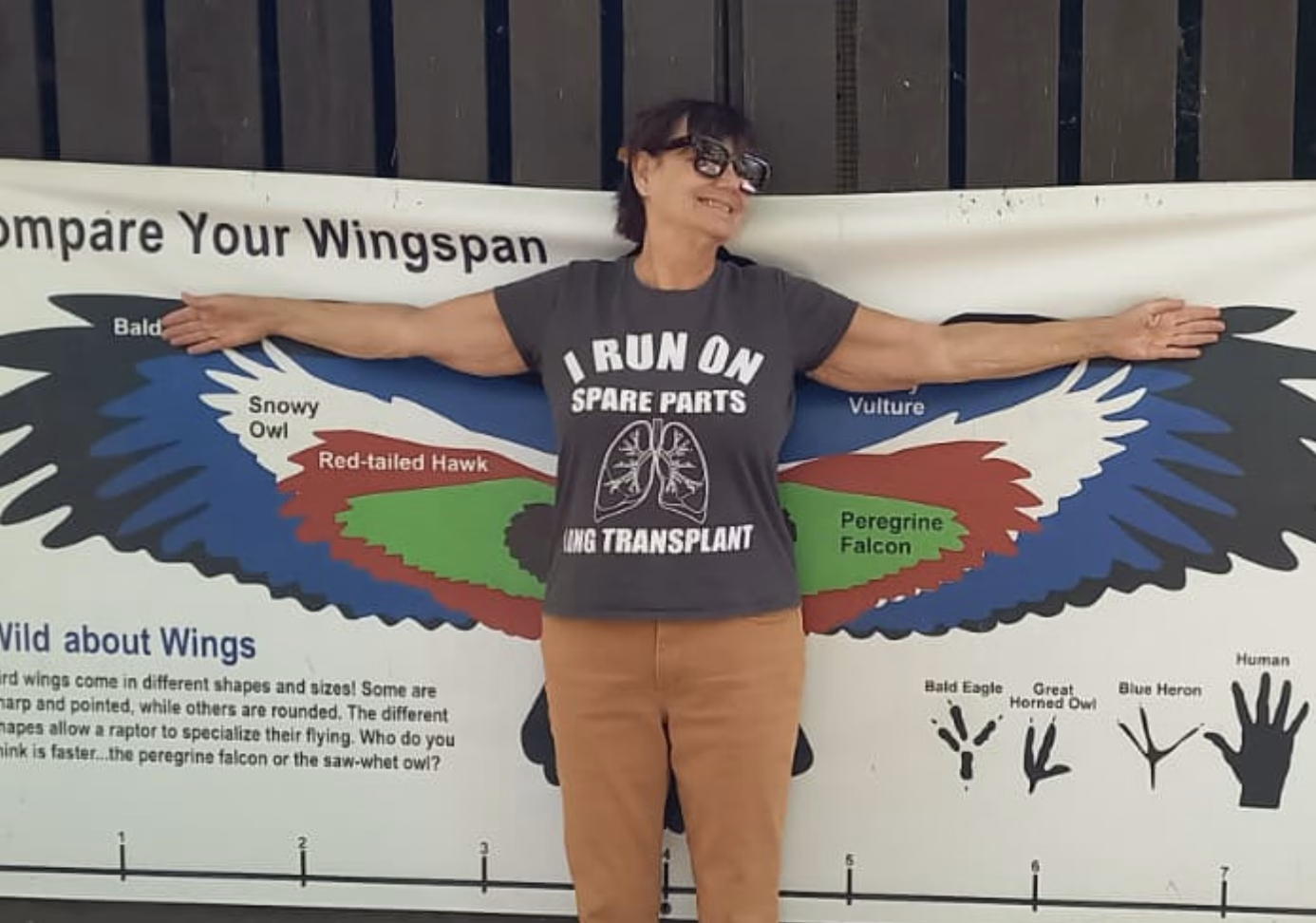
The Lung Transplant Foundation Mentorship Program would like to recognize Tammy Robinson, one of our longest-serving Mentors. Tammy received a …

Lung transplant and substance abuse are rarely used in the same sentence. Yet, it is not uncommon for an individual’s …

Creating a world where all lung transplant patients live long, healthy lives.
1249 Kildaire Farm Road, Suite 323
Cary, NC 27511
Disclaimer: This website does not provide medical advice. The information, including but not limited to text, graphics, images, and other material contained on this website are for informational purposes only. No material on this site is intended to be a substitute for professional medical advice, diagnosis, or treatment. Always seek the advice of your physician or other qualified health care provider with any questions you may have regarding a medical condition or treatment before undertaking any new health care regimen. Never disregard any professional medical advice or delay in seeking care because of something you have read on this website.